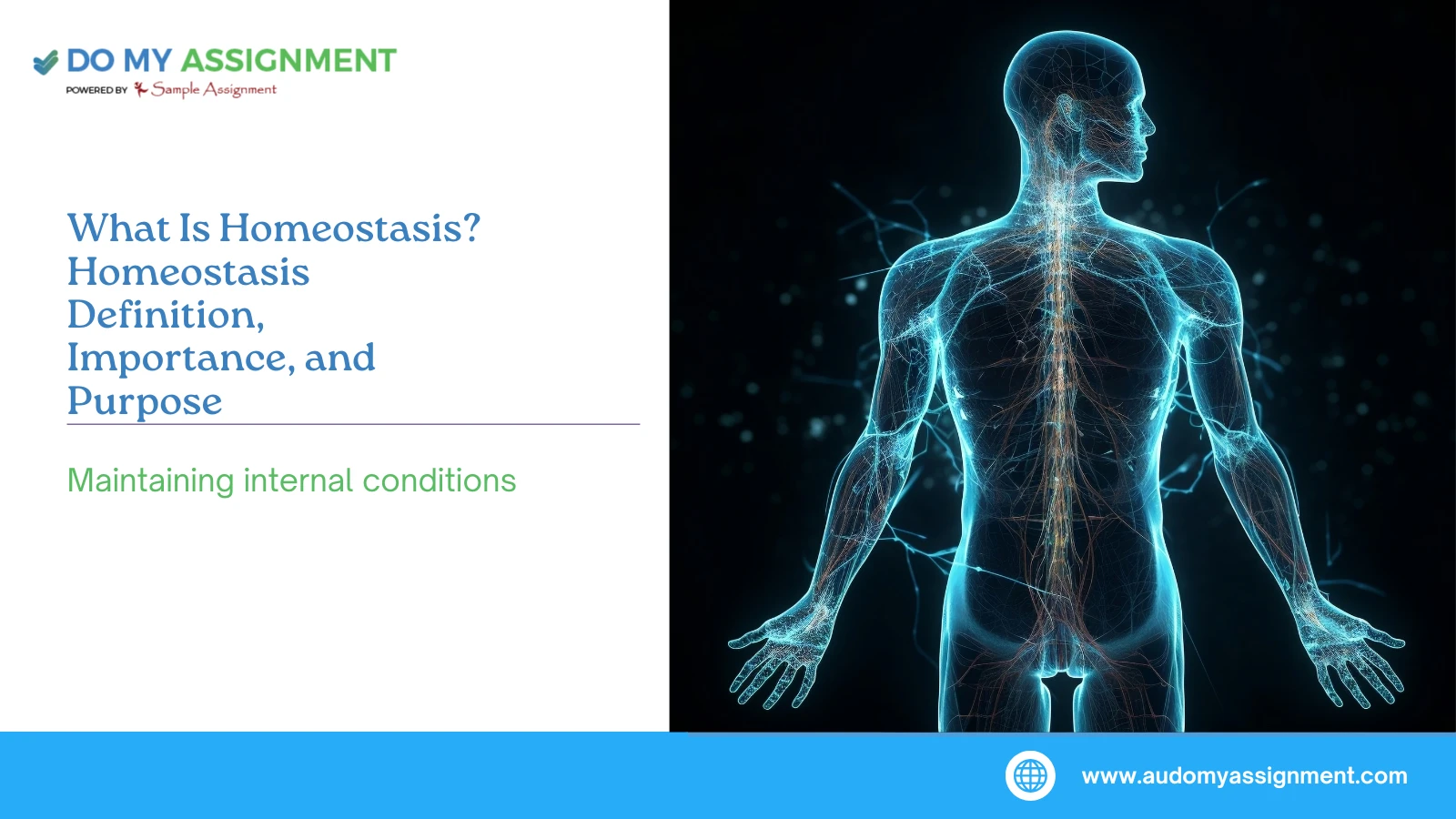
What Is Homeostasis? Homeostasis Definition, Importance, and Purpose
Highlights

Do you know why humans and other living things can survive despite the world around them constantly changing? Our surroundings change all the time; it might be sunny today, and tomorrow might be windy, rainy, or cold. Despite all that, our bodies still adapt and survive. Similarly, when we eat a huge meal, our body immediately responds to the stimuli to keep the blood sugar stable. Ever wonder why this happens? That is all the magic of homeostasis: the process that helps our bodies adapt to the ever-changing environment of the outside world. In this blog, you will learn more about what homeostasis is, its uses, and its significance in our survival as a species.
Homeostasis Definition: What does it mean?
The basic definition of homeostasis would be a process by which an organism maintains the stability of its internal environment in order to adapt to its external environment. It is similar to having an in-built thermostat in our bodies, constantly monitoring the environmental conditions and thereby adjusting the internal conditions to maintain everything within a narrow, and optimal range.
The term ‘homeostasis’ is derived from two Greek words, ‘homois’ and ‘stasis.’ “Homois” can be translated into English as ‘similar,’ whereas “stasis” can be translated as ‘standing still.’ Although ‘standing still’ might appear at first to mean a static state, it is actually a dynamic process. Think of it this way: every single cell, tissue, and organ in your body needs very specific conditions in order to function properly.
These factors include temperature, pH levels, blood glucose levels, water and salt balance, blood pressure, etc. When any of these factors start to deviate from their ideal set point, the body’s homeostatic mechanisms get to work to put these conditions back into line. It wouldn’t be possible for human beings to survive without these constant adjustments to our internal conditions.
The Relationship Between Homeostasis and Survival
The relationship between homeostasis and survival is absolute and intricate. As stated previously, humans and other beings would not be able to survive in this harsh world without a homeostatic mechanism defending their bodies. Let us understand the connection that homeostasis and survival share with each other:-
Optimal Cellular Function
Every cell in our bodies is a miniature factory, performing countless functions at the same time to support life. These functions are highly sensitive to influences such as temperature, pH, and the concentration of toxins and waste products.
Preventing Damage and Disease
When homeostatic mechanisms fail, the body’s internal environment becomes unstable, which can lead to illness and disease. Extreme deviations in bodily conditions can contribute to life-threatening illnesses such as diabetes, hypothermia, hyperthermia, etc.
Responding to Environmental Changes
Our external environment is constantly changing; homeostasis provides us with the internal stability that allows the body to cope with these challenges without our internal systems failing. It is the buffer that protects the delicate internal machinery from external shocks, giving the body resilience.
Maintaining Energy Efficiency
Stable internal environment means that cells won’t have to work as hard to compensate for fluctuations in the external environment. This efficiency saves energy, which can then be allocated to vital processes such as growth, repair, and reproduction.
Foundation for Complex Life
The evolution of multicellular organisms, particularly complex beings like humans is entirely dependent on homeostatic functions.
The Importance of Homeostasis
Homeostasis is not just important for our survival; there are several more factors that make the importance of homeostasis all the more significant. If you are struggling with such assignment on homeostasis and are in need of assignment help online, then feel free to contact us anytime. Let us look at the different reasons that makes homeostasis important beyond just facilitating survival of life:-
Enabling Specialized Cell Function
Homeostasis creates and maintains the precise internal conditions that individual cells and specialized tissues need to perform their functions optimally.
Facilitating Complex Physiological Processes
Many vital bodily functions, such as digestion, respiration, circulation, and excretion, rely on homeostatic functions and a stable internal environment to operate efficiently.
Promoting Optimal Enzyme Activity
Enzymes are biological catalysts that enable all chemical reactions within cells. Homeostasis maintains the necessary conditions required to facilitate these chemical reactions.
Underpinning Disease Resistance and Recovery
A diligent homeostatic system allows an organism to better withstand and recover from internal and external stressors, such as infection, injury, or exposure to toxins.
Allowing for Adaptation and Environmental Resilience
Whether it's migrating to different climates, adjusting to varying food availability, or even just surviving daily temperature shifts, the capacity to maintain internal balance frees the organism from being completely dependent on a stable external environment.
Ensure Efficient Resource Allocation
Homeostasis helps the body conserve energy by maintaining stable internal conditions, thus preventing the cells from working harder than they need to.
What is the purpose of homeostasis?
As we have seen how homeostasis helps us survive and how it helps in the performance of other vital bodily functions, let us look at the true purpose of this phenomenon. In the following points, we will learn what purpose homeostasis serves in general:-
Keeps Your Body Running Smoothly
Similar to how a car engine needs to be at a certain temperature to work properly, our body’s engine also needs the ideal conditions. Homeostasis ensures that these conditions always remain at their optimal levels so that our bodies can function properly.
Protects Your Cells From Damage
If your internal conditions become too unbalanced, then your fragile cells might get damaged or even die. Homeostasis acts as a protective shield, preventing such damage from happening.
Ensures Chemical Reactions Happen Right
Every single bodily function depends on numerous chemical reactions. These reactions need very specific conditions in order to happen, and homeostasis is what ensures that these conditions exist.
Keeps You Alive and Healthy
Undoubtedly the most important purpose of homeostasis, it keeps humans and other organisms alive. By maintaining your internal environment optimally, homeostasis protects you from diseases and helps accelerate recovery.
Allow Your Organs to do their Jobs
Each organ has to perform a specific function; homeostasis makes sure that the blood, fluid, and chemicals they work with are always at the right levels, so the organs can perform their tasks without breaks.
Helps You Adapt to the Outside World
No matter whether the outside conditions are hot, cold, or windy, our body needs to maintain a stable internal temperature. Homeostasis allows you to adapt these changes without falling ill.
Maintain Constant Energy Flow
Your body needs a constant supply of energy. Homeostasis helps regulate blood sugar, and ensuring your cells have access to a steady supply of fuel to power their activities.
Supports Growth and Repair
Lastly, homeostasis helps your body to grow, heal wounds, and replace old cells. Homeostasis provides a consistent background for the human body to grow and replenish itself.
Conclusion
We hope with this blog you were able to gain a better understanding of what homeostasis is and what role it plays in our survival. Such involuntary functions are what keeps our body running all day. Can you imagine what would happen if these functions weren’t properly being performed? If you want to learn more about biological functions or biology in general, then feel free to contact Do My Assignment. Even better, if you want help with a biology assignment, then you should definitely reach out to us!



Nick Johnson
Nick is a multi-faceted individual with diverse interests. I love teaching young students through coaching or writing who always gathered praise for a sharp calculative mind. I own a positive outlook towards life and also give motivational speeches for young kids and college students.
Get Free Quote In 2 Minutes*

Related Blog





Still Confused? Take a look at the reviews of DoMyAssignment
6984+ Positive Reviews with a rating of 4.9/5

21-04-2023
Biotechnology
Incredible service! My assignment was perfect and delivered on time. Highly recommend Do My Assignment!Connor, Order Code: SA**398

18-04-2023
Management
Excellent support and high-quality work! Saved me so much time and stress. Thank you!Peter, Order Code: SA**358
12-04-2023
Nursing
Fantastic experience! Quick delivery and top-notch quality. Will definitely use Do My Assignment again!James, Order Code: SA**698
05-04-2023
Accounting
Reliable and professional! The assignment met all my requirements. Great service!Jordie, Order Code: SA**613
21-04-2023
Mathematics
Outstanding work! The team was very responsive and the assignment was flawless. Highly recommended!Harper, Order Code: SA**112
28-03-2023
Management
Do My Assignment exceeded my expectations! Detailed, well-structured, and prompt delivery.Tom, Order Code: SA**558
21-03-2023
Engineering
Highly satisfied! My assignment was well-researched and excellently written. Great job!Chris, Order Code: SA**287
15-03-2023
Physics
Amazing service! The quality exceeded my expectations. Delivered before the deadline!Sheryl, Order Code: SA**412
10-03-2023
Programming
Superb assistance! Professional, punctual, and perfect. Do My Assignment is the best!Ben, Order Code: SA**271
18-04-2023
Statistics
Exceptional work! The assignment was detailed and well-organized. Truly impressed!Sydney, Order Code: SA**388
09-03-2023
Company Law
Top-quality service! My assignment was accurate and well-written. Will use again!Tory, Order Code: SA**943
04-03-2023
Xero
Professional and efficient! Delivered high-quality work right on time. Very pleased!Henry, Order Code: SA**732
23-02-2023
Economics
Fantastic support and excellent writing! Made my academic life so much easier!Cameron, Order Code: SA**906
19-02-2023
Dissertation
Great experience! Thorough research and perfect formatting. Highly recommend!Phil, Order Code: SA**322
15-02-2023
Chemical Engineering
Excellent quality and timely delivery! Very happy with the service provided.Jon, Order Code: SA**625
11-02-2023
SPSS
Perfectly done assignment! Clear, concise, and delivered on schedule. Thank you!Mitchell, Order Code: SA**590
08-02-2023
Company Law
Super fast and reliable! The assignment was spot on. Definitely worth it!Monica, Order Code: SA**821
05-02-2023
IT
Amazing job! The content was insightful and precisely what I needed. Bravo!Jaspreet, Order Code: SA**432
01-02-2023
Management
High-quality work and timely submission! Very professional service. Will order again!Ankita, Order Code: SA**834
24-01-2023
Taxation
Exceptional writing and great customer service! Truly a life saver for students!Alex, Order Code: SA**228